
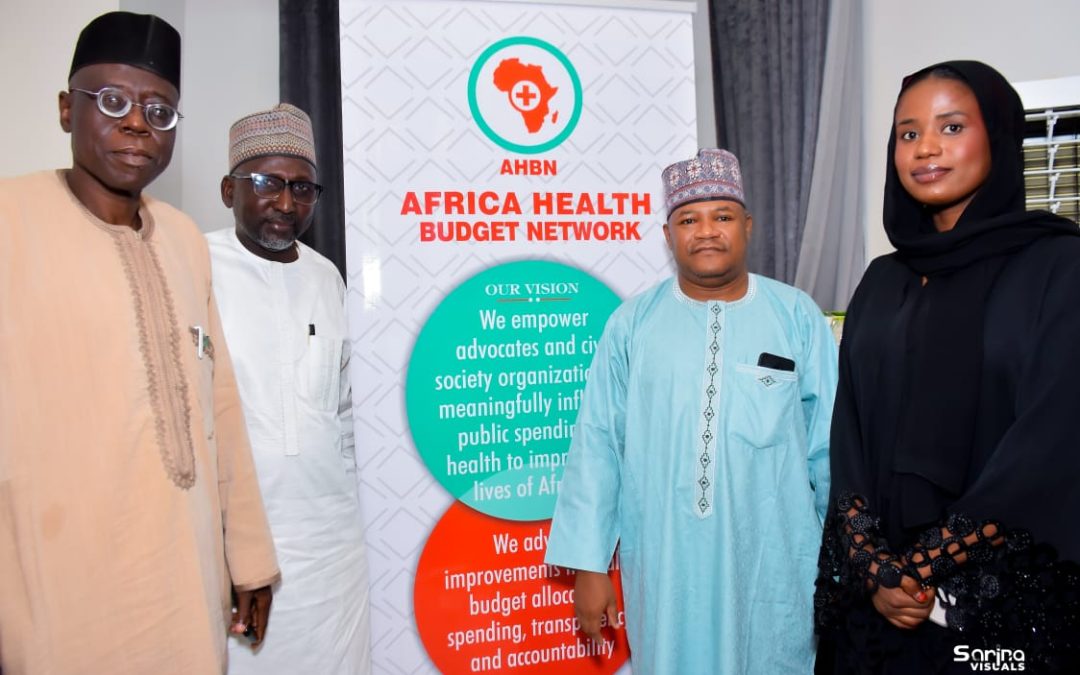

The Africa Health Budget Network (AHBN) has convened a Stakeholders’ Engagement Meeting in Kano State, on Compressed Natural Gas (CNG), Electric Vehicles (EVs), and soot-free buses.
The engagement which drew participants from civil society organizations, government agencies, the media, and other relevant stakeholders in Kano, was part of the ongoing national consultation on implementation of policies.
Speaking during the meeting, Coordinator of the AHBN, Dr Aminu Magashi Garba, stated that the network, at the national level, is committed to collaborating with both federal and state governments to develop robust interventions that promote the adoption of CNG and electric vehicles nationwide.
He identified climate change and transportation as major determinants of public health, noting that worsening climate conditions could lead to serious health challenges, including respiratory diseases such as lung cancer.
Dr Magashi stressed that health and climate change are closely linked, adding that climate action is one of the 17 Sustainable Development Goals (SDGs).
He further noted that local fabrication of CNG vehicles would create employment opportunities and stimulate economic growth.
In her presentation titled “The Project Goal: Developing a National Policy on Soot-Free Buses and a CNG/Electric Bus Strategy Programme Delivery,” AHBN Programme Delivery and Francophone Liaison Officer, Amina Haladu Mohammed, outlined key project outcomes.
These include government endorsement of a national policy on soot-free bus technologies and EURO IV vehicle emission standards, as well as the integration of priority Short-Lived Climate Pollutant (SLCP) mitigation measures, targets, and co-benefit assessments into the revised Nationally Determined Contribution (NDC) and its implementation plan.
She added that the project also aims to adopt regulations aligned with the ECOWAS directive on EURO IV vehicle standards, alongside the endorsement of a national strategy and implementation plan for deploying CNG and electric buses by the end of the project or shortly thereafter.
Earlier, the Technical Adviser at the Kano State Ministry of Transport, Dr Nura Hassan, disclosed that the Kano State Government has put modalities in place to convert the existing transport green paper into a comprehensive transport policy.
He revealed that the state plans to introduce climate-driven Bus Rapid Transit (BRT) buses along designated routes to significantly reduce carbon emissions.
Also speaking, the Founder of Sustainable Innovation and Development Solutions (SIDES), Dr Musa Abdullahi Sufi, identified inadequate engagement with grassroots stakeholders and limited political action as major obstacles to effective policy implementation.
He urged civil society organisations (CSOs) to intensify public education on government policies to ensure successful outcomes.
On inclusivity, the Acting Coordinator of V-PeSDI, Aftahana Dahiru Sarina, called for disability awareness training for transport-related associations in Kano State.
He decried the stigma faced by persons with disabilities (PWDs) from some commercial vehicle operators and urged the government to prioritise PWD-friendly BRT buses.
Other speakers at the engagement included the National Secretary of NAWOJ, Comrade Wasila Ladan, and the Kano State Chairperson of NAWOJ, Comrade Bahijja Kabara, among others.